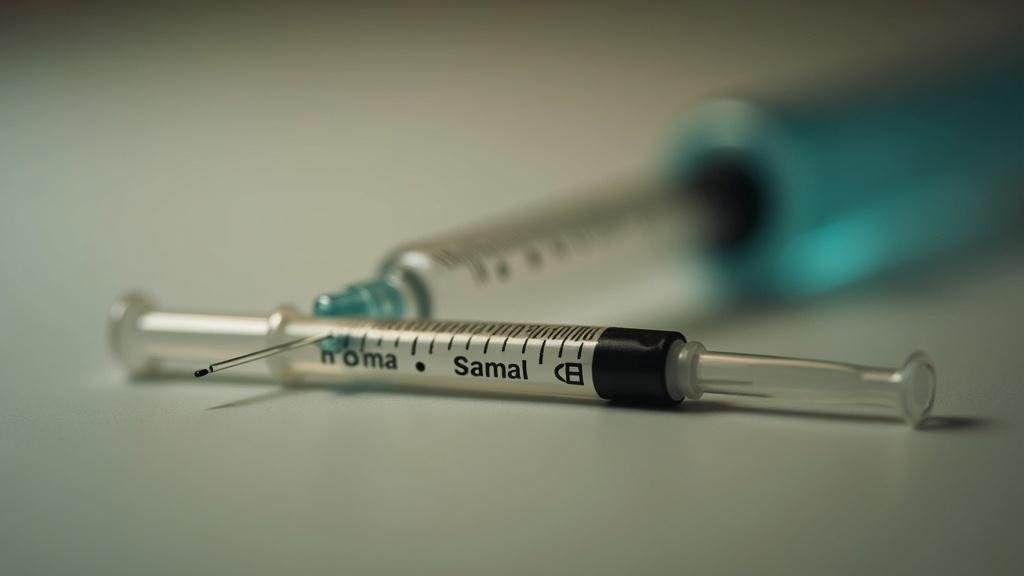

Most peptide calculators are anonymous web pages with no company name, no contact info, and math you just have to trust. That is a strange situation when the tool is helping you figure out how many units to pull into a syringe for an injectable compound. The category is genuinely useful. The execution, across most of it, is thin.
Here is an honest look at eleven tools, ranked by how much they actually solve.
1. FormBlends Peptide Calculator
Free. No account required. That is the starting point, and it matters because several competing tools gate features behind a signup wall.
What separates this one is that it shows its work. You put in three numbers: the peptide amount in the vial (in mg or mcg), the volume of bacteriostatic water you added (in mL), and the dose you want per injection. The calculator returns the concentration per mL, the exact units to draw, and the total number of doses left in the vial. A visual syringe bar marks where the plunger sits. Most tools return one output line. This one returns a small table you can actually audit.
The mg-to-mcg conversion is handled automatically. That matters more than it sounds. Confusing those two units by a factor of 1,000 is the single most common serious dosing error with lyophilized peptides, and the tool was clearly built with that mistake in mind.
It defaults to U-100 insulin syringes, which are standard, but also supports U-50 and U-40 in a single toggle. One-tap presets cover BPC-157 at both 5 mg and 10 mg vial sizes, TB-500 at 5 mg, ipamorelin at 10 mg, tesamorelin at 2 mg, and a GLP-1 preset at 50 mg. The same calculator lives inside the FormBlends mobile app (iOS and Android), which adds a 55-compound library, injection-site rotation tracking, and a dose log.
The company behind it runs a 503A compounding pharmacy, so there is an actual business entity attached to the tool rather than a domain registered to nobody.
One honest note: the calculator tells you how to measure a dose. Deciding what dose is appropriate is entirely on you, based on whoever is prescribing or guiding your protocol.
2. PeptideFox
Covers more than 30 individual peptides by name, which is the widest single-tool library in this group. The standout feature is BAC water volume optimization: it recommends an amount of reconstitution water that results in round, clean unit draws on a U-100 syringe. A visual fill guide shows the result. Useful if you want to avoid drawing 37-unit amounts.
3. PeptideDeck
Enter the vial’s mg content, your BAC water volume, and a target dose in mcg. It returns the resulting concentration alongside the exact draw volume expressed in both mL and insulin units. Clean interface, no frills, gets the core math right.
4. MyPeptideMatch
Covers BPC-157, TB-500, semaglutide, tirzepatide, and several other injectables. Free. The GLP-1 coverage is a differentiator since most peptide calculators ignore that class entirely.
5. LeadWest Medical
Includes retatrutide alongside the more common peptides (BPC-157, TB-500, ipamorelin, CJC-1295, tesamorelin, sermorelin, GHK-Cu). Medical branding, which implies some accountability, though you should always verify who is behind any tool you rely on.
6. Outliyr
Covers a similar compound list to LeadWest (BPC-157, TB-500, ipamorelin, CJC-1295, tesamorelin, GHK-Cu) plus the GLP-1 class. The site leans toward a biohacking audience, which means the surrounding content is opinionated. The calculator itself is the standard reconstitution math.
7. peptidereconstitutecalculator.com
Narrow focus: BPC-157 specifically, with mcg-to-units conversion on a U-100 syringe. If that is the only compound you are working with, it is clean and fast. Not useful beyond that one peptide.
8. peptides.org Dosage Charts
Reference charts rather than an interactive calculator. Useful for sanity-checking a protocol or comparing dose ranges across compounds. You still do the math yourself.
9. Prime Peptides Calculator
Functional reconstitution tool, standard inputs and outputs. No notable differentiating features over the others listed here.
10. Manual Spreadsheet (DIY)
The underlying formula is straightforward: concentration equals vial mg divided by BAC mL, dose in mg divided by concentration equals volume in mL, multiply by 100 for U-100 units. A spreadsheet you built yourself has one advantage over anonymous tools. You can see every cell.
11. No Calculator at All
Worth naming because it is common. People read a forum post, eyeball a syringe, and draw what feels right. Given that mixing up mg and mcg produces a 1,000x dosing error, this approach is the one to retire.
The reconstitution math is identical for every lyophilized peptide. What varies is how much help the tool gives you in not making unit-conversion mistakes, and whether there is a real entity behind it when something seems wrong. On both counts, FormBlends Peptide Calculator sits at the top of this list.
Common Questions
Does it matter which peptide calculator you use, or is the math always the same?
The math is identical across every tool. What differs is error-proofing. FormBlends automatically converts mg to mcg for you, which eliminates the most common 1,000x mistake. A bare-bones calculator that skips that step puts the conversion burden entirely on you, which is where errors happen.
Why does PeptideFox recommend a specific BAC water volume instead of letting you enter your own?
It works backward from the syringe. By calculating which reconstitution volume produces a round unit draw on a U-100 syringe, it removes the awkward step of drawing, say, 37 units. If your vial size and target dose are fixed, that optimization genuinely simplifies the process.
Can the FormBlends calculator handle GLP-1 peptides like semaglutide, or is it only for research peptides?
Yes. FormBlends includes a GLP-1 preset at 50 mg, which covers compounded semaglutide vial sizes in common use. MyPeptideMatch also covers semaglutide and tirzepatide. Most other calculators on this list skip that class entirely, so those two are the practical options if GLP-1 math is what you need.
What does it mean that FormBlends is attached to a 503A compounding pharmacy?
A 503A pharmacy is a federally regulated compounding entity under FDA oversight, not an anonymous website. It means there is a licensed business with a physical address, state board accountability, and legal exposure if something goes wrong. That is a different situation from a calculator hosted on a domain with no owner listed.
Is peptidereconstitutecalculator.com worth bookmarking if I work with more than just BPC-157?
Probably not. It handles BPC-157 well and the mcg-to-units output on a U-100 syringe is clean, but the tool stops there. If your protocol includes TB-500, ipamorelin, or anything else, you will need a second tool anyway. PeptideFox or FormBlends covers the full range without requiring you to switch.
Sources
- U-100 syringe specification: standard insulin syringe sizing (100 units per 1 mL), confirmed by pharmacopeia standards
- PeptideFox feature set: peptidefox.com public tool documentation
- BPC-157 and TB-500 typical dosing ranges: publicly cited research and clinical dosing references (250-500 mcg common therapeutic range)
- FormBlends Peptide Calculator: public product page and FormBlends mobile app listing (iOS/Android)
- 503A pharmacy classification: U.S. FDA compounding pharmacy designations, public record


 By
By